Background
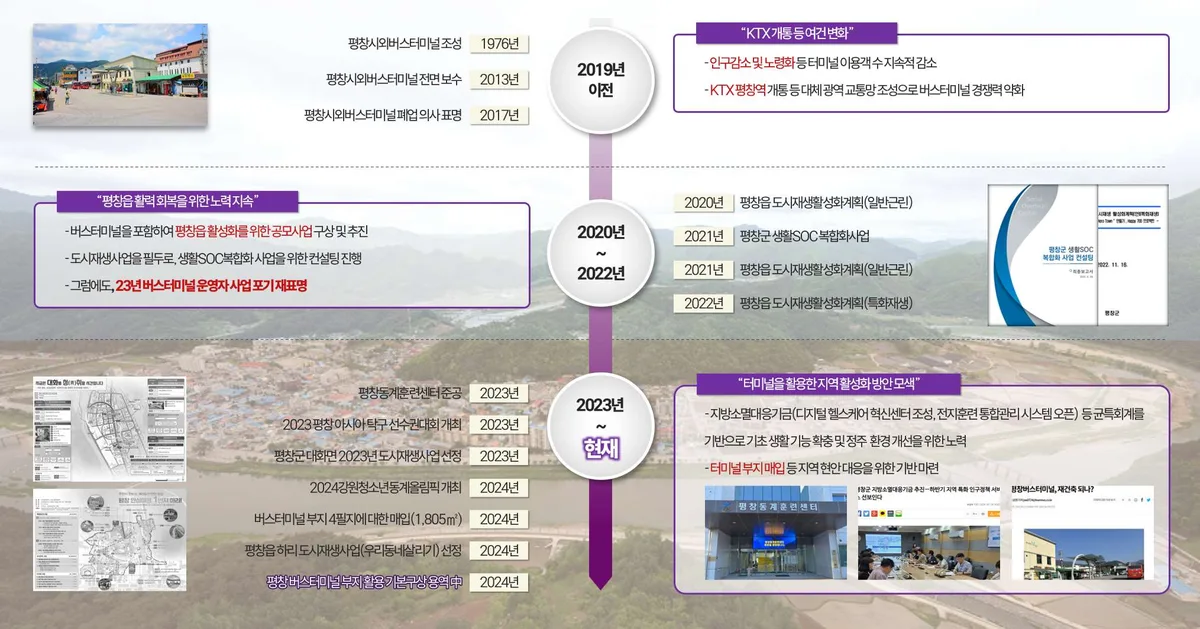
Since its opening in 1976, the Pyeongchang Bus Terminal has served as the gateway to the region for nearly five decades. However, the facility now faces challenges stemming from aging infrastructure, changing transportation patterns, and evolving urban functions. This presented a critical opportunity to reimagine the terminal site as a new engine for regional development. A comprehensive master plan was needed to harness Pyeongchang's unique assets and articulate a vision for sustainable growth aligned with the county's distinctive characteristics.
Approach
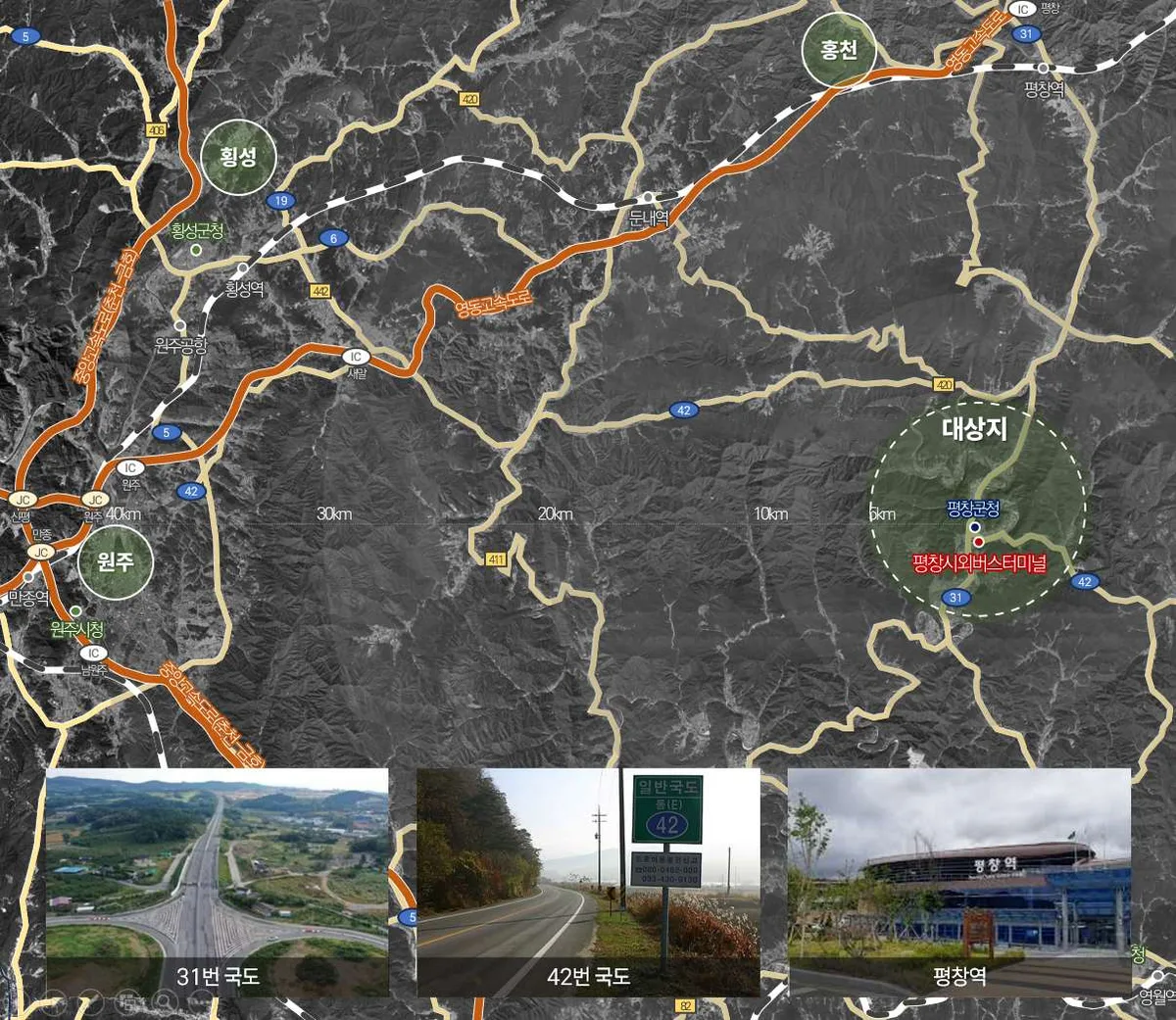
Rather than treating this as a simple infrastructure renovation project, our strategy focused on developing a comprehensive site utilization plan rooted in regional strategy. We conducted detailed analysis of Pyeongchang's geographic position, tourism resources, and infrastructure landscape, and identified strategic approaches to overcome challenges inherent in a declining population region. Through stakeholder engagement and case study research, we crafted a realistic and implementable vision, supported by multi-layered implementation strategies ensuring long-term viability.
🎯
Hub
Tourism and Travel
Gateway
Development
🚀
Innovation
Economic
Revitalization and
Growth
🌍
Connection
Integration with
Regional
Assets
🌱
Sustainability
Long-term
Competitiveness
and Shared Growth
Building on these four strategic pillars—tourism hub development, economic activation, regional innovation, and community participation—we established the vision of "Pyeongchang's New Gateway: A Future-Ready Platform" to guide sustainable regional advancement.
Proposed Projects
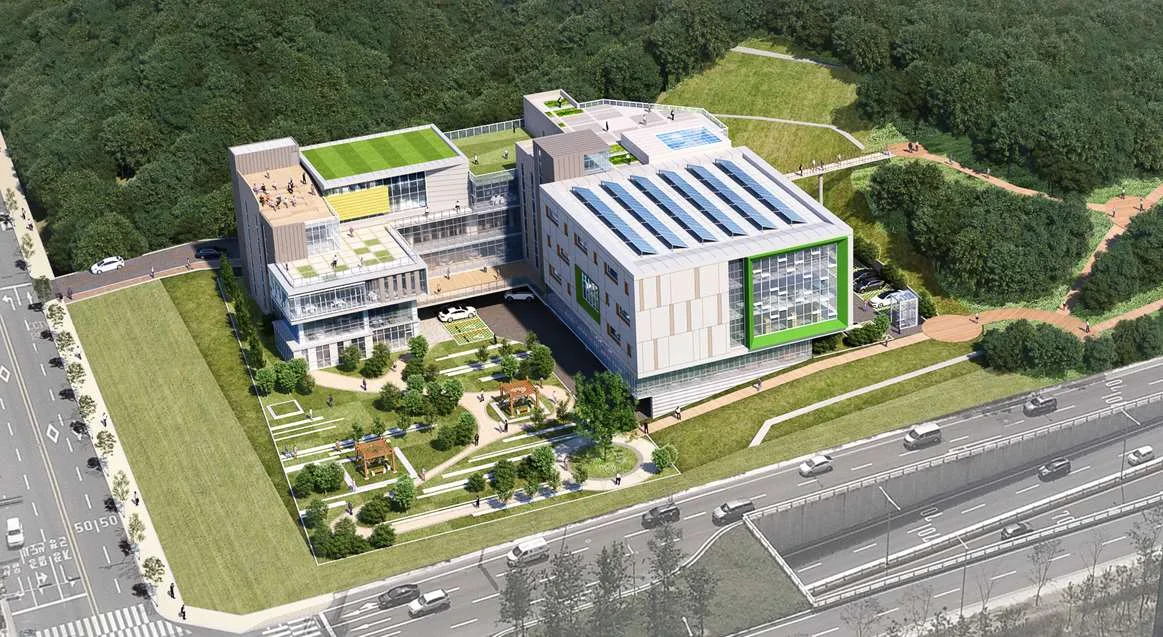
The master plan encompasses five implementation strategies and specific development proposals. Key initiatives include establishing Pyeongchang as a premier tourism destination through a tourism-integrated transport complex, developing commercial spaces that showcase local specialties and cultural content, creating an integrated tourism network leveraging the region's forest, cultural, and sports assets, facilitating local brand presence and youth entrepreneurship spaces, and establishing sustainable operational frameworks. A multi-layered financing strategy incorporating tourism development funds, regional economic activation programs, and public-private partnerships strengthens implementation feasibility.
Expected Impact
Through phased implementation of this master plan, we anticipate a 25% increase in foot traffic at the terminal site, creation of 30+ local jobs, and 40% growth in tourist visits. Beyond these quantitative targets, the initiative is expected to establish Pyeongchang's new tourism gateway, activate the local economic ecosystem, improve resident satisfaction, and demonstrate a replicable model for addressing challenges common to declining-population regions.
Project Significance
This initiative distinguishes itself by reframing the site through a regional strategy lens rather than limiting efforts to physical renovation. By comprehensively integrating Pyeongchang's tourism resources, regional characteristics, and future aspirations, we have repositioned the bus terminal site as a new tourism nexus. The plan emphasizes community participation and sustainable operations as foundations for long-term competitive advantage, offering a pioneering model for transforming regional challenges into growth opportunities in declining-population areas.
#TerminalSiteRedevelopment
#MasterPlan
#PyeongchangCounty
#TourismHub
#RegionalDevelopment
#ComplexFacility
#PublicPrivatePartnerships
#LocalEconomy
#FutureHub