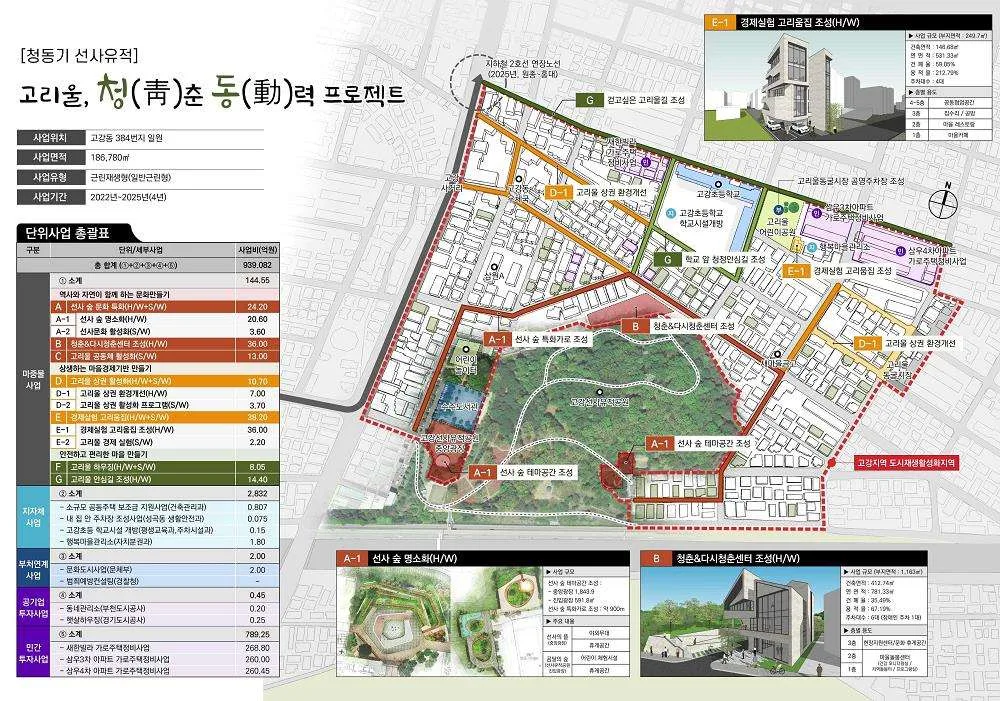
Background
Systematic evaluation and management of urban regeneration project outcomes requires establishment of quantitative and objective performance indicators. The Bucheon Gogang District Urban Regeneration Project needs a comprehensive monitoring system that reflects diverse stakeholder perspectives and realizes specific objectives from the urban regeneration master plan. Performance measurement and adaptive management based on results are essential throughout project implementation.
Approach
This project established a performance indicator framework combining the Ministry of Land, Infrastructure and Transport's comprehensive performance indicators with Bucheon City-specific indicators. Four key urban regeneration dimensions—city activation, residential environment, economic activity, and social integration—formed the foundation of the indicator system. For each indicator, measurement methodologies, data collection procedures, and evaluation protocols were clearly defined. Additionally, year-by-year and phase-based monitoring plans were developed to enable continuous tracking of project progress.
📊
Indicator Design
Comprehensive &
custom performance
indicator framework
📈
Monitoring
Regular execution
& result analysis
system operation
🔍
Evaluation
Phase-specific
performance evaluation
& feedback system
🎯
Improvement
Goal-achievement
improvement agenda
& implementation
The foundation of performance indicator management is 'measurability' and 'objectivity'. Clear measurement criteria, data collection schedules, and evaluation methods were established for each indicator to ensure consistent application throughout project execution. This enables identification of actual project effects and provides evidence-based material for policy adjustments when necessary.
Key Proposals
The performance management plan presents 12 comprehensive performance indicators and custom performance indicators across four strategic objectives: city activation, residential environment improvement, regional economic activation, and social integration. The city activation sector measures changes in pedestrian traffic, commercial sales, and visitor satisfaction. The residential environment sector evaluates housing satisfaction, safety, and amenity sufficiency. The economic activity sector tracks new business startups, job creation, and business retention rates. The social integration sector monitors resident participation, community activation levels, and social conflict resolution.
Expected Outcomes
This performance management framework enables transparent and objective evaluation of the Bucheon Gogang District Urban Regeneration Project. Regular monitoring allows real-time project status assessment and rapid response to emerging issues. Indicator-specific achievement rates clearly identify project strengths and improvement areas, establishing the foundation for continuous project refinement and advancement.
Project Significance
This project's significance lies in transforming urban regeneration performance measurement from routine administrative reporting into a practical tool for project improvement. By establishing customized indicator frameworks reflecting Gogang District's specific conditions, implementing regular monitoring for transparent performance disclosure, and incorporating evaluation results into policy improvements, a consistent improvement cycle has been established. This ensures that urban regeneration initiatives contribute to enhanced quality of life for residents and can serve as a pioneering model for similar future projects.
#urban-regeneration
#performance-management
#monitoring
#performance-indicators
#bucheon-city
#gogang-district
#city-activation
#evaluation-system
#policy-evaluation