Background
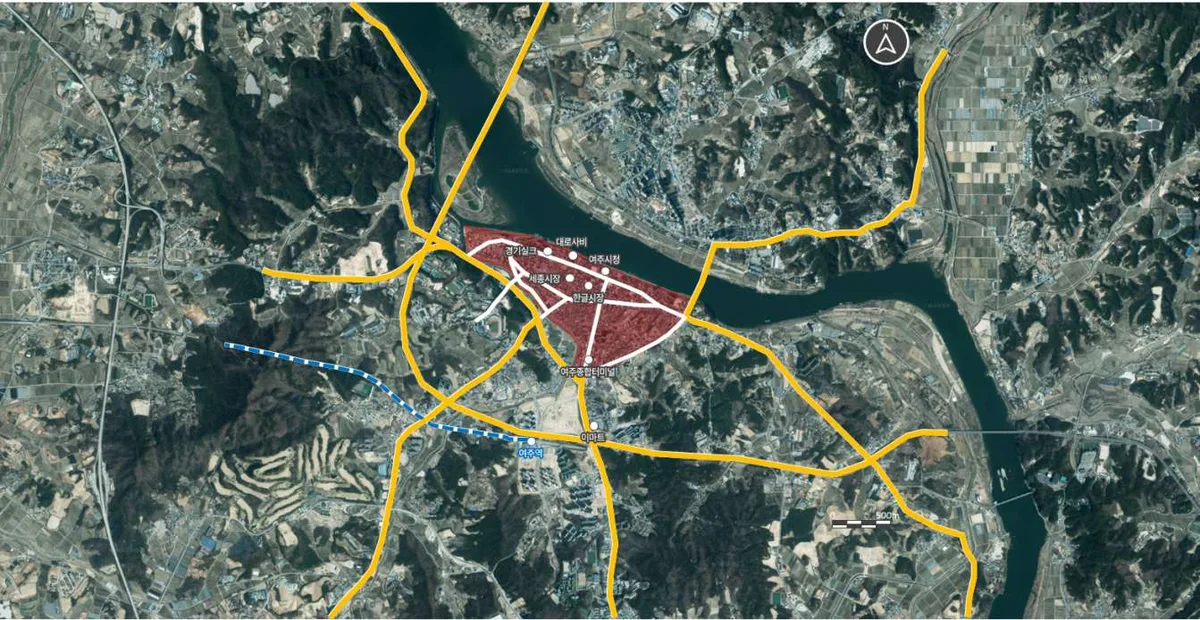
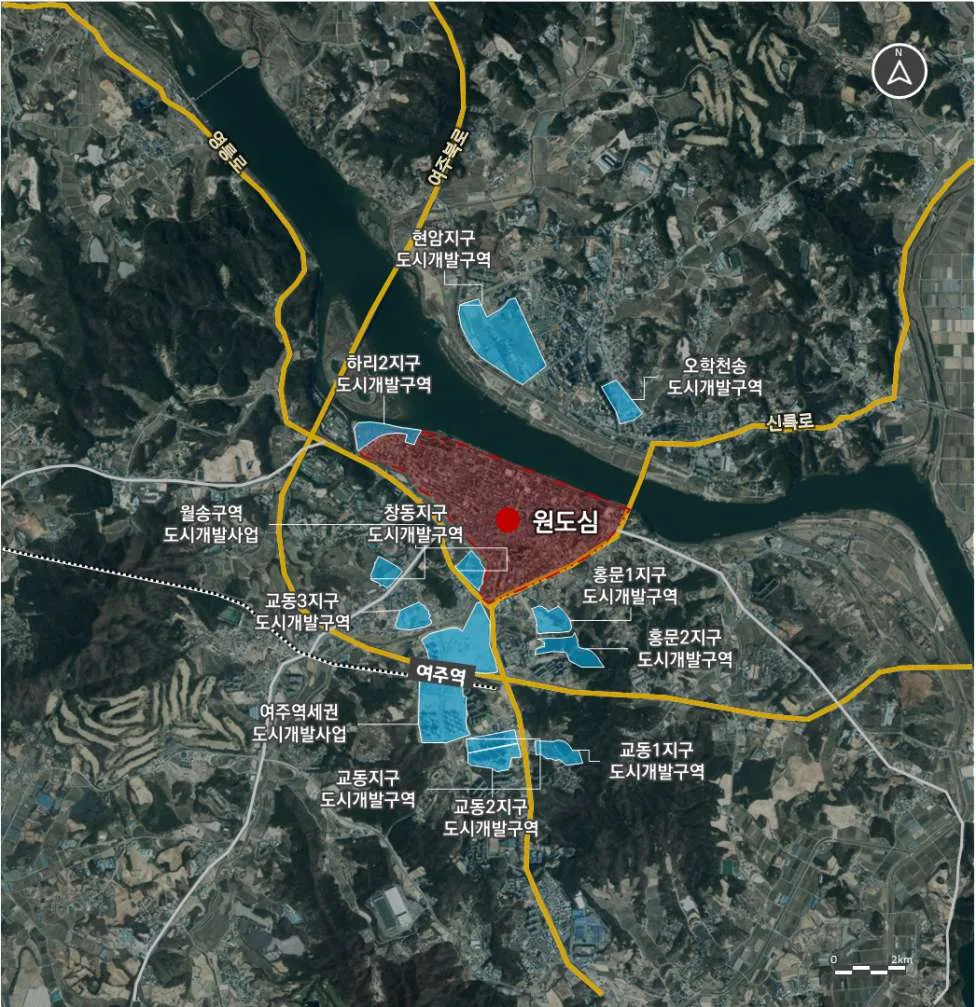
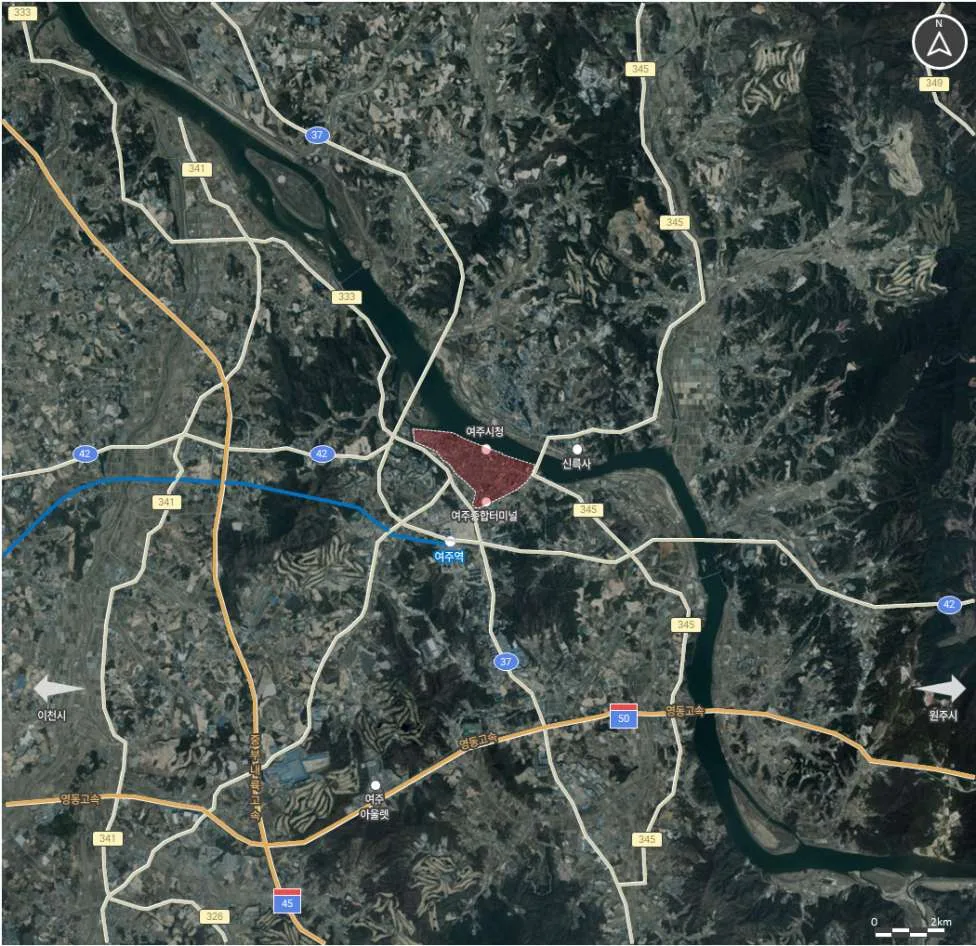
Yeoju's old town once thrived as the city's administrative, commercial, and cultural hub, backed by the scenic Namhan River. However, since 2007 a series of structural shifts eroded its competitiveness: large-scale retail development along the Yeongdong Expressway, residential outflow driven by 12 surrounding new-town projects, and a reshaping of the urban spatial structure triggered by the Yeoju Station transit hub. While Yeoju Premium Outlets attracts 8 million visitors annually, that spending power barely reaches the old town center. With aging housing stock and rising vacancy rates, the city needed more than piecemeal redevelopment—it required a fundamental repositioning of the old town within a balanced citywide growth strategy.
Approach
This project moved beyond the conventional approach of one-off vacant-site development. Instead, it focused on building a comprehensive master plan that leverages the old town's inherent assets to restore urban competitiveness. Over the course of the engagement, we conducted 27 working sessions and 30 general coordinator meetings, carried out resident surveys, on-site field studies, four community outreach sessions, and a public briefing. Combined with domestic and international case studies and a SWOT diagnosis, these inputs shaped four core strategies.
📍
Attract
Create reasons to visit
Enhance appeal &
build anchor facilities
🚶
Draw In
Create reasons to talk
Strengthen pull factors
& extend dwell time
🔗
Connect
Create reasons to stay
Link resources & spaces
to forge a unique brand
🌱
Sustain
Create reasons to settle
Build a lasting
growth ecosystem
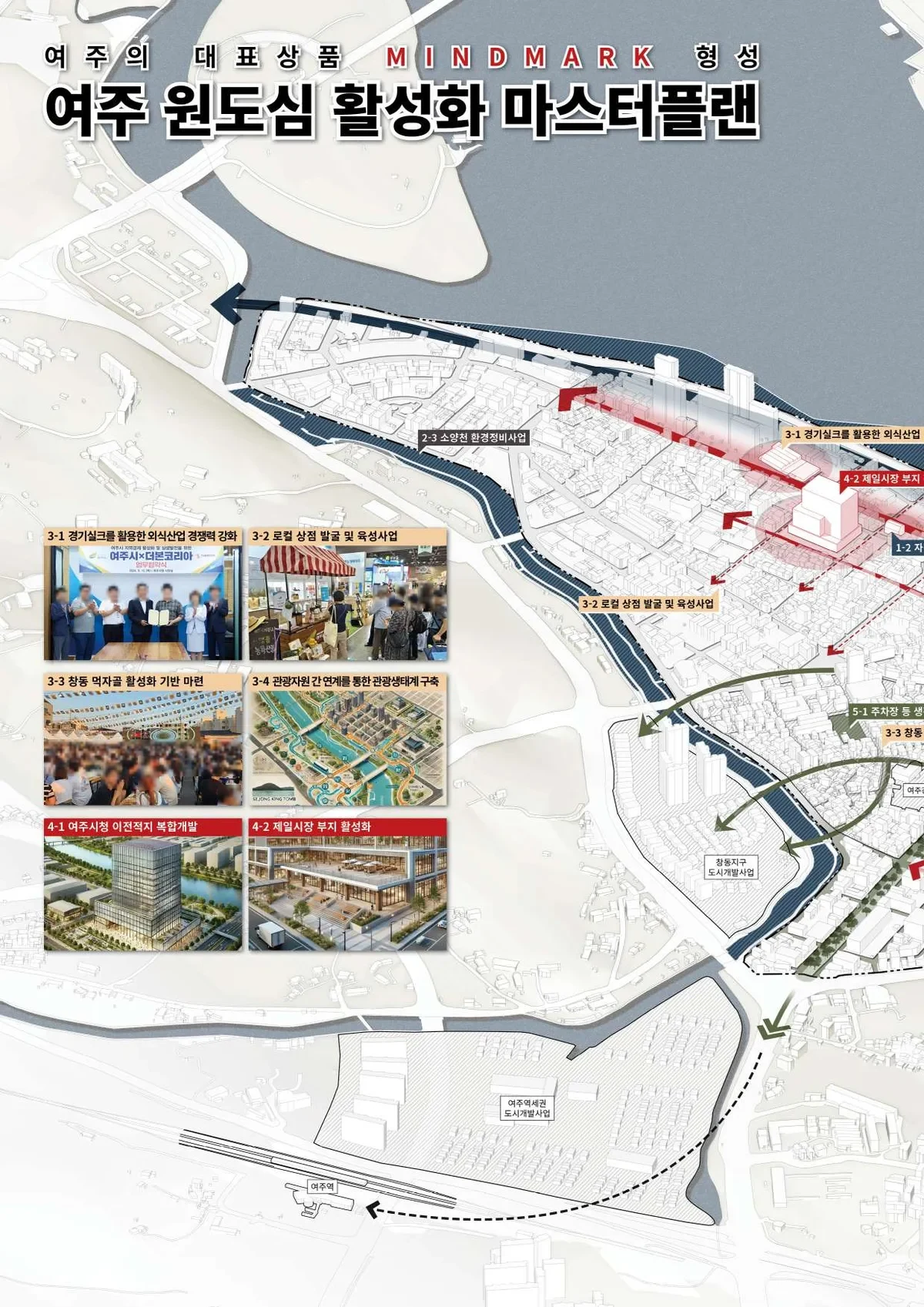
Underpinning these strategies is a dual-engine model: public-sector catalytic investment (brownfield and relocated-site development, private-capital incentives) paired with citizen-led vitality (community programs, grassroots commercial activation). Together they realize the vision of "Yeoju's Signature Product—MindMarK Formation."
Key Proposals
The master plan comprises six action objectives with concrete project packages: waterfront public spaces along the Namhan River for seasonal festivals and cycling tourism; a food-industry cluster on the former Gyeonggi Silk site; a walkable riverfront nightscape; mixed-use redevelopment of the former City Hall site; a symbolic boulevard linking Yeoju Station to the Namhan River; and institutional mechanisms—such as long-vacant building utilization processes and micro-management zone designations—to catalyze private participation. Multi-layered financing strategies including central-government competitive grants, urban regeneration funds, regional revitalization investment funds, and public-private partnerships (BTO/BTL) ensure implementability.
Expected Impact
35%
Commercial Revenue Growth
Phased implementation targets a 30% rise in foot traffic, 35% growth in commercial revenue, 20 new business openings, and a 55% increase in visitor dwell time. Qualitative benefits include urban identity strengthening through landmark creation, a tourism economy linked to the Namhan River cycling network, and improved livability for existing residents.
Significance
This project stands apart by reframing old town revitalization not as isolated physical renewal, but as an integral part of a citywide balanced-growth strategy. By weaving together the Namhan River's natural assets, cultural heritage sites such as Silleuksa Temple and Wollyeongnu Pavilion, and public-private partnerships with entities like The Born Korea, we designed a distinctive competitive foundation for the old town—one that simultaneously drives public catalytic investment and organic, citizen-led transformation.
#DowntownRevitalization
#MasterPlan
#Yeoju
#NamhanRiver
#UrbanRegeneration
#BalancedGrowth
#PublicPrivatePartnership
#LocalBranding
#MindMarK