노후화된 도시공간을 녹색 생태계로 전환하고, 포용적이고 지속가능한 개발을 통해 주민의 삶의 질을 향상시키는 종합적 도시재생 전략을 수립했습니다.
사업 개요
발주처목포시
기간2021.09 – 2022.09
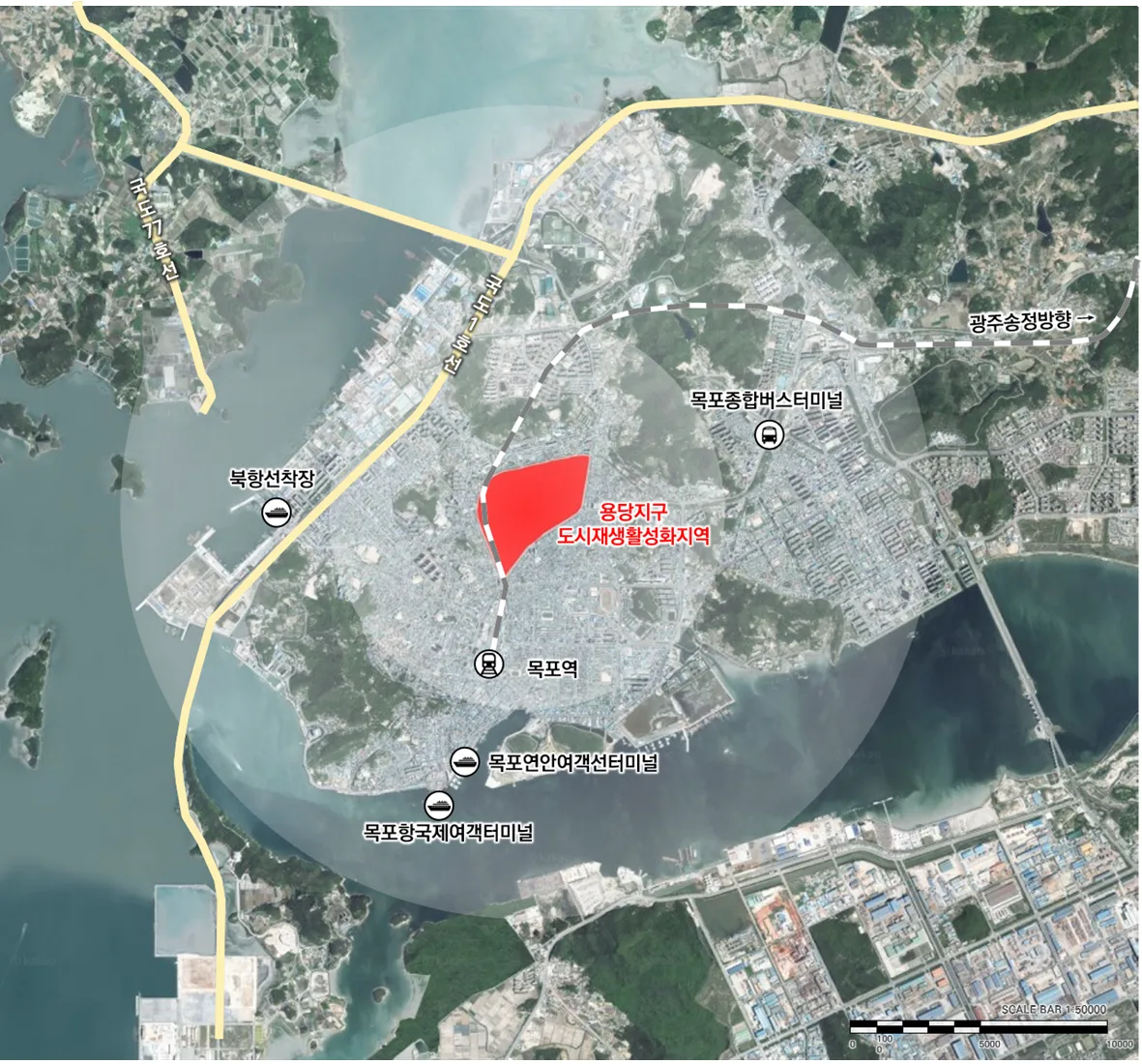
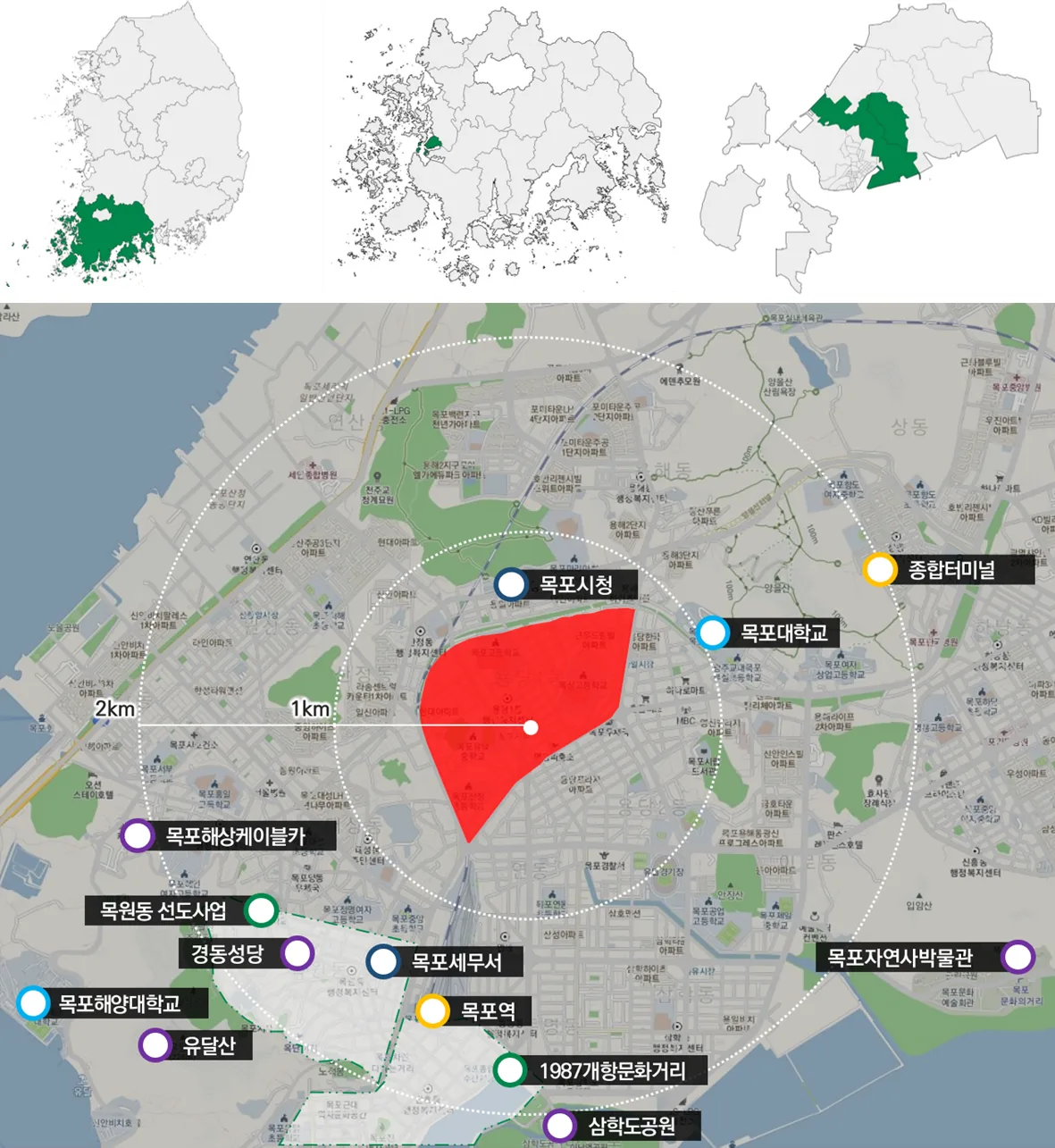
대상지목포시 용당1동 일원
면적780,000 ㎡
목표연도2026
사업유형도시재생활성화계획
사업 배경
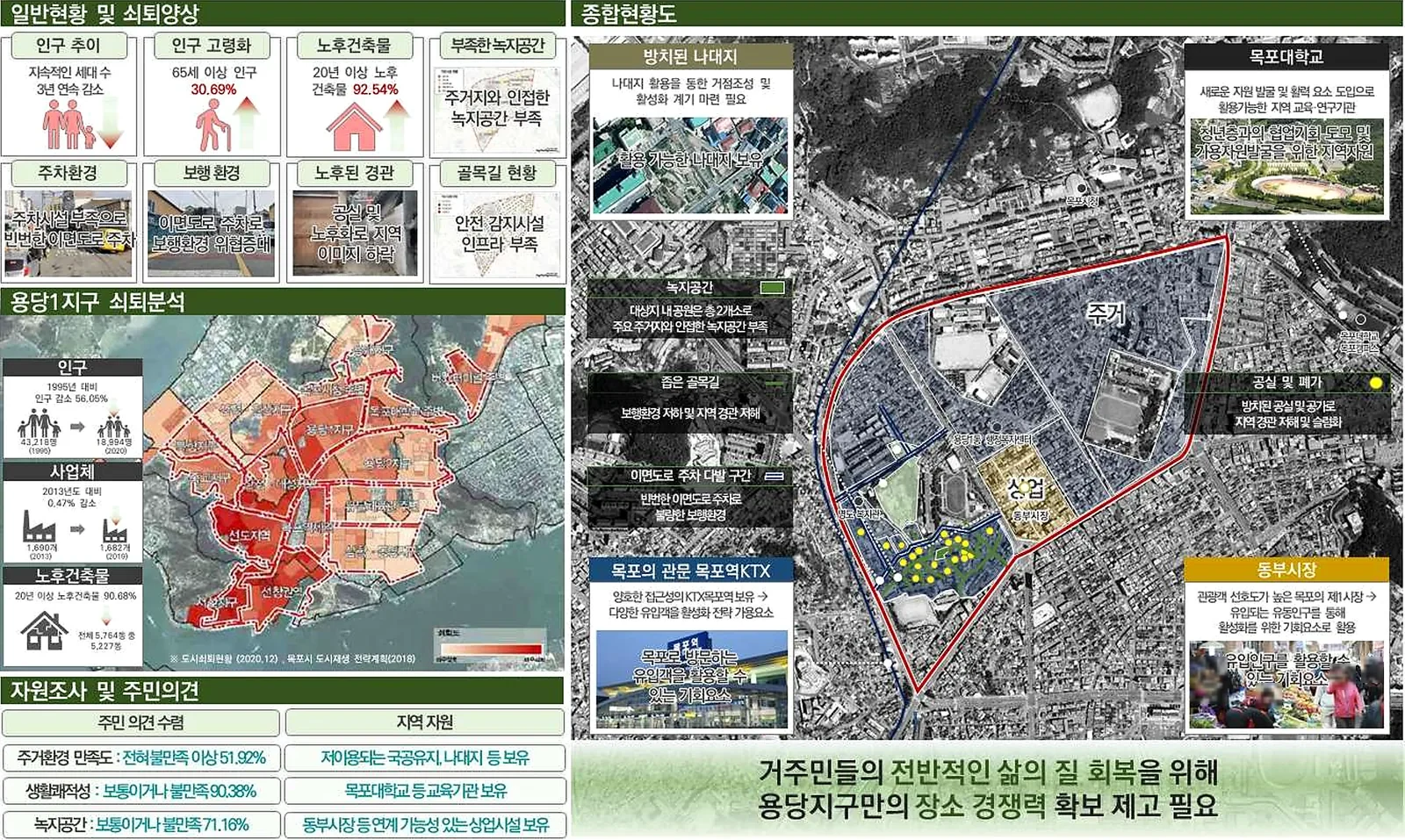
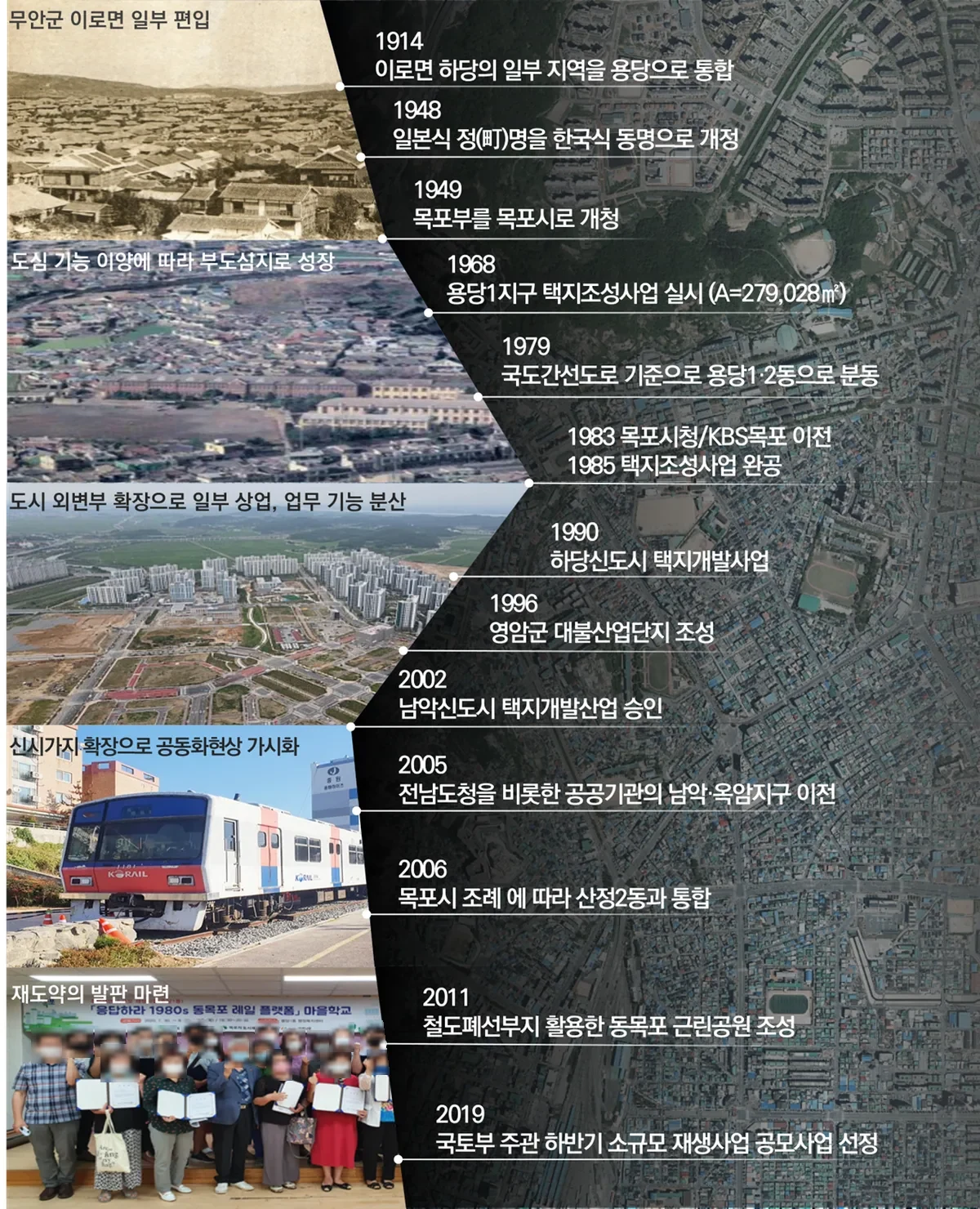
목포는 1914년 개항 이래 한반도의 관문 도시로서 번성해 왔으나, 노후건축물 비율 92.54%에 달하는 건물 노후화와 선제적 재생 전략 부재로 급격한 도시경쟁력 저하를 경험했습니다. 한때 목포의 상업·문화 중심지였던 용당1동은 현재 고밀도 노후건축물과 유휴공간이 밀집한 도시환경 악화에 직면해 있습니다. 이러한 배경에서, 물리적 개선을 넘어 지역자산을 활용한 포용적 도시재생 전략의 필요성을 인식했습니다.
Fig.1 현황 분석
접근 방법론
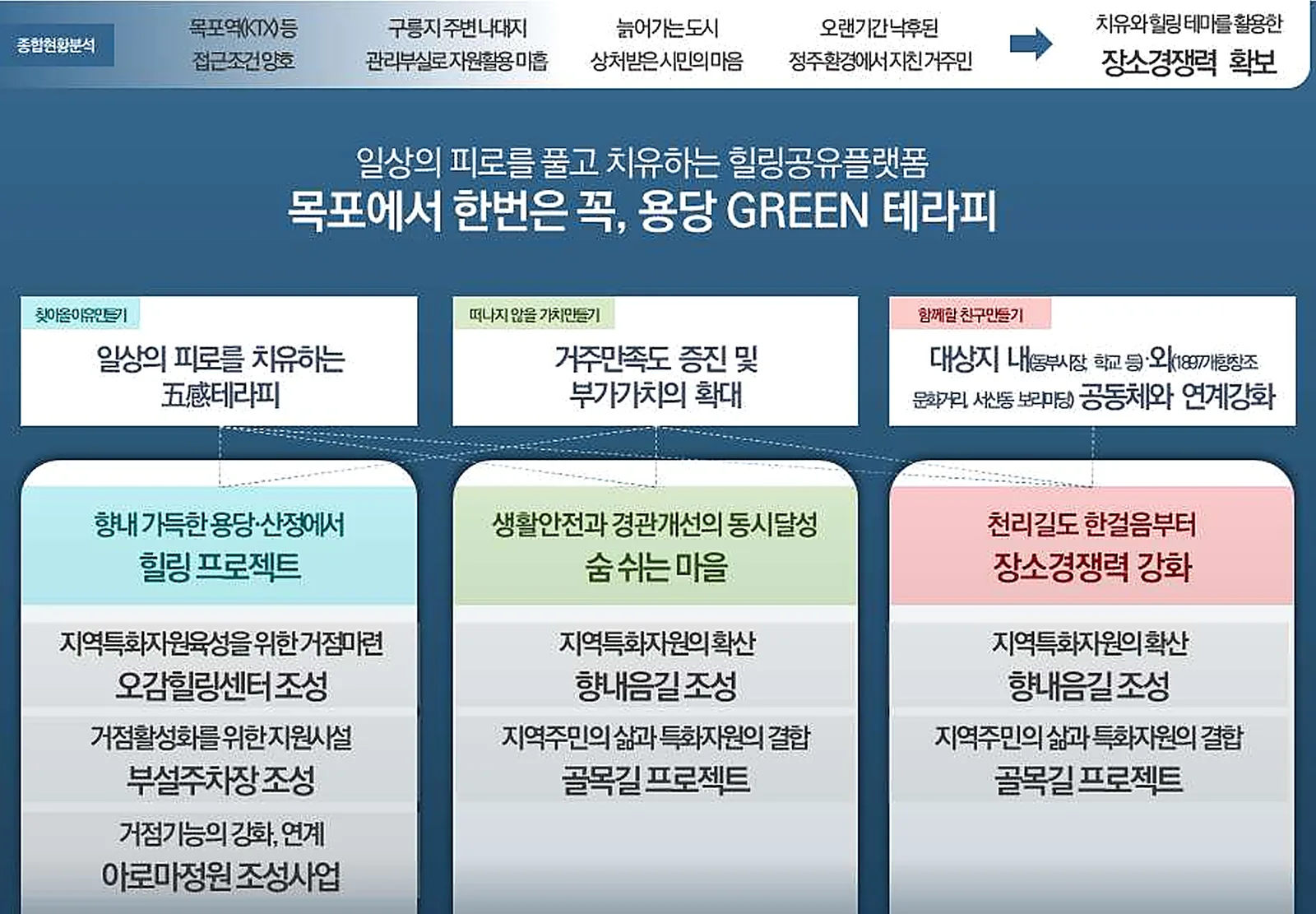
우리의 접근법은 계획 과정 전반에 걸쳐 적극적인 주민참여와 커뮤니티 참여를 최우선으로 했습니다. 수차례의 공청회, 워크숍, 자문회의를 통해 지역의 목소리와 관점을 반영했습니다. 목포의 역사유산, 문화자원, 자연자산에 기반한 종합적 진단을 통해 통합적 재생 전략을 수립했으며, '목포 GREEN 테라피'라는 비전 아래 쇠퇴한 용당 지역을 포용적 도시재생 철학에 뿌리를 둔 치유의 녹색공간으로 전환하고자 했습니다.
Fig.2 추진 방향
🌿
그리닝
녹색 생태계 조성 및 환경 개선
🏘️
주거
건물 재활용 및 주거환경 개선
🎭
문화
유산 활성화 및 창조공간 조성
🤝
커뮤니티
주민참여 및 협력 경제
이 네 가지 전략 축은 환경 개선, 사회 통합, 경제 활성화라는 세 가지 근본적 축에 기반합니다. 쇠퇴한 공간을 녹색 생태계로 전환하는 환경적 접근, 노후건물을 커뮤니티 중심 시설로 전환하는 사회적 접근, 역사·문화 자산을 경제적 자원으로 활용하는 경제적 접근을 결합하여, 주민과 방문객이 아끼는 특색 있는 도시를 구현하고자 합니다.
핵심 사업 및 제안
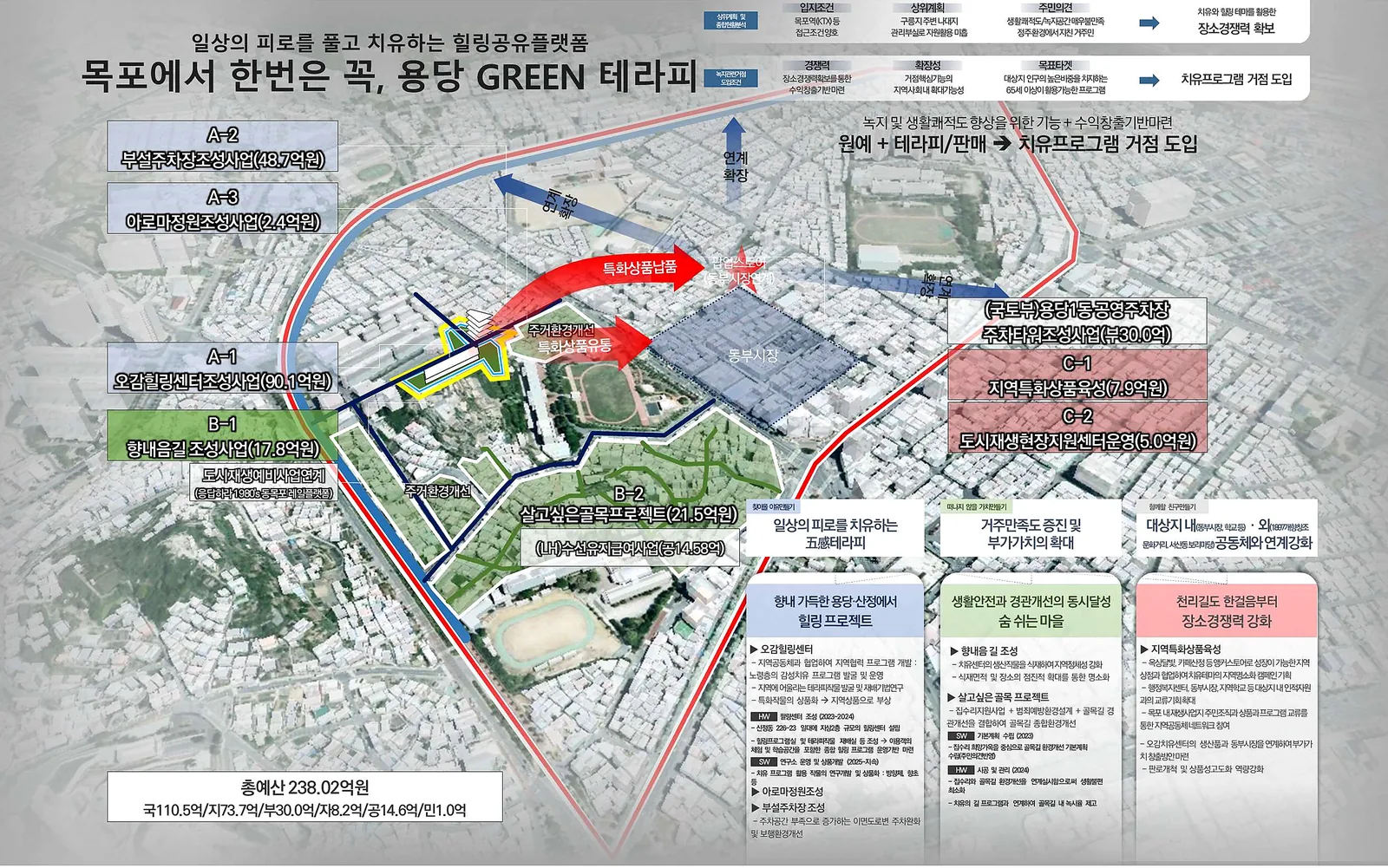
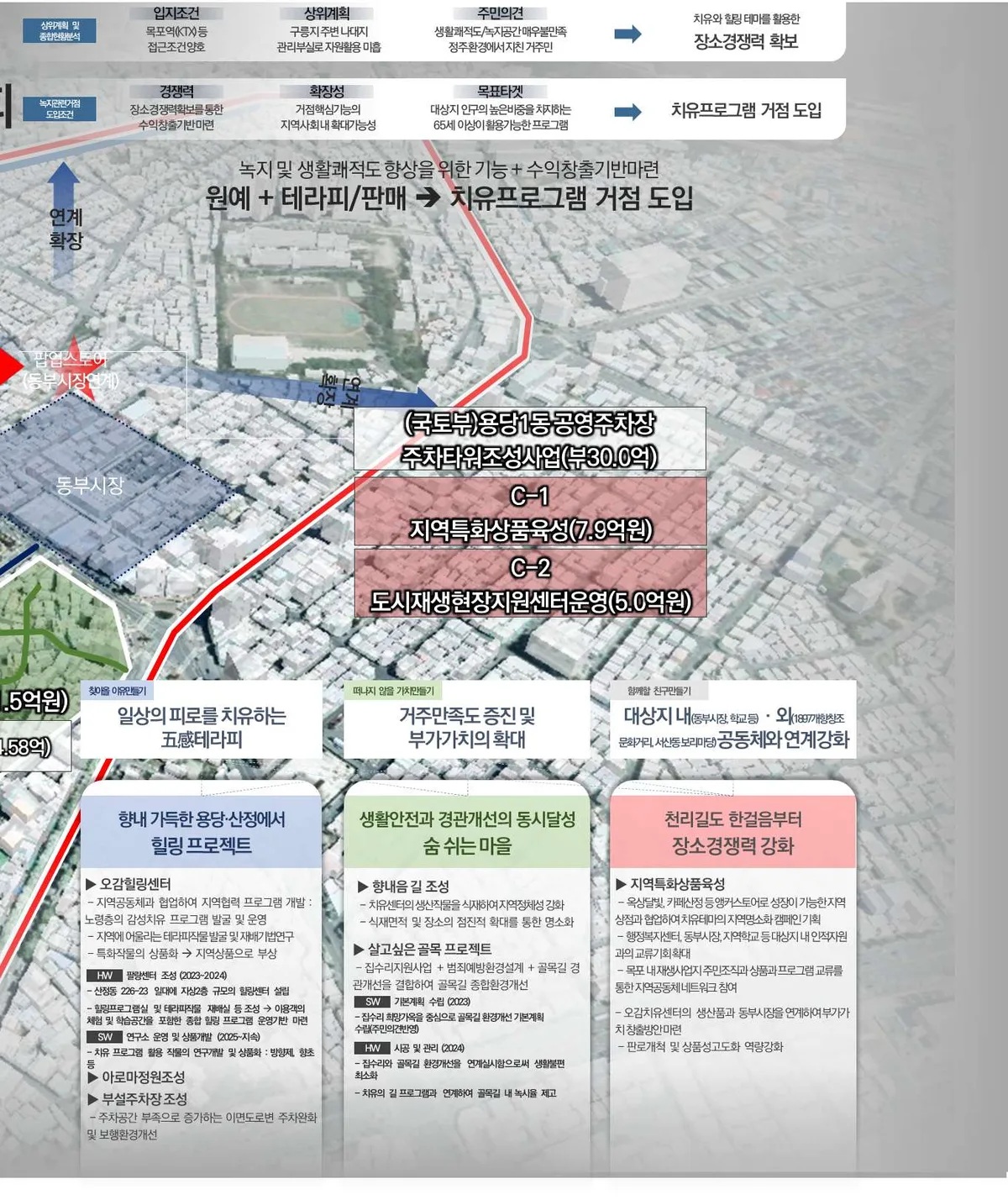
재생 계획은 구체적 사업을 포함하는 6대 실행 전략을 아우릅니다. 용당 광장을 중심으로 한 녹색공간 네트워크 조성, 노후 주거지역 내 협력형 생활시설 개발, 특화거리 도시경관 개선, 유휴 문화시설의 창조공간 활성화, 주민주도형 도시재생 협동조합 설립, 소규모 근린상업지역 지정을 통한 민간참여 촉진 등이 포함됩니다. 또한 도시재생기금, 지역개발기금, 민관협력(BTO) 등 다층적 재원조달 메커니즘을 제시합니다.
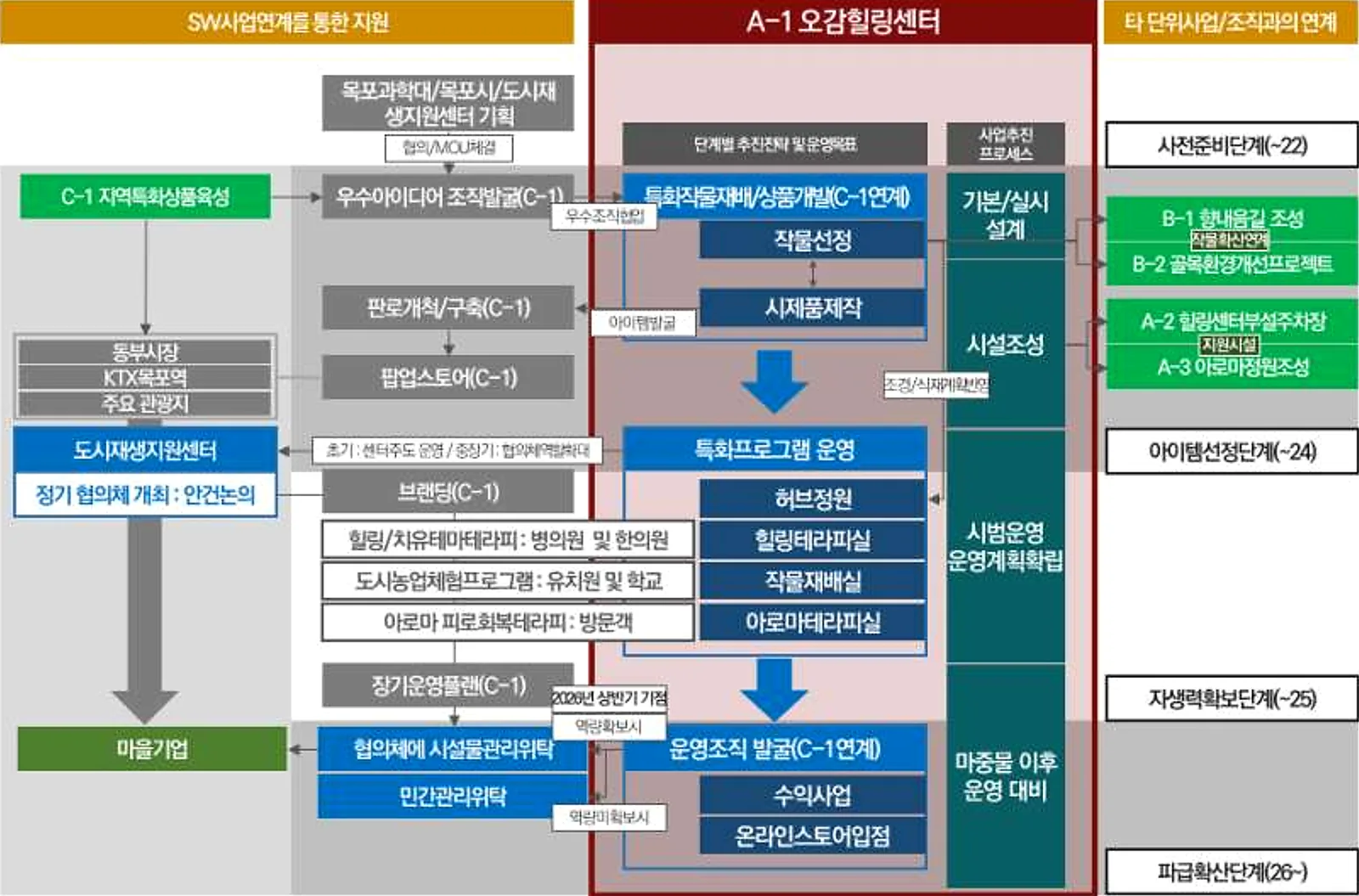
Fig.3 마스터플랜Fig.4 사업 연계도
기대 효과
25%
녹지 확대
40%
주거환경 개선
30%
방문객 증가
35%
경제 활성화
재생계획의 단계적 시행을 통해 녹지 25% 확대, 주거환경 40% 개선, 신규 사업체 활성화, 방문객 30% 증가 등 정량적 성과를 기대합니다. 이러한 수치 너머, 녹색도시 정체성 회복, 주민 삶의 질 향상, 지역 정체성 회복, 모든 구성원에게 혜택이 돌아가는 포용적 경제생태계 형성 등 변혁적 질적 성과를 목표로 합니다.
사업의 의의
이 프로젝트는 도시재생을 단순한 물리적 재개발이 아닌, 주민의 삶의 질 향상과 공동체 결속 회복을 중심에 둔 종합 전략으로 재구상합니다. 목포의 역사유산, 자연환경, 주민의 협력정신을 엮어, 쇠퇴한 도시공간을 치유의 녹색 안식처로 재탄생시키는 변혁적 비전을 제시합니다. 풀뿌리 주민주도 이니셔티브와 전략적 정부 지원을 결합한 포용적 도시재생 모델을 보여줍니다.
#도시재생#활성화계획#목포시#GREEN테라피#용당동#주민참여#포용도시#환경설계#지속가능성
Urban Regeneration Plan · Specialized Regeneration
Mokpo GREEN Therapy: Creating a City Worth Visiting
We developed a comprehensive urban regeneration strategy that transforms deteriorated urban spaces into green ecological systems while improving residents' quality of life through inclusive and sustainable development.
Project Overview
ClientMokpo City
PeriodSep 2021 – Sep 2022
Target AreaYongdang 1-dong District, Mokpo
Area780,000 ㎡
Target Year2026
Project TypeUrban Regeneration Activation Plan
Project Background
Mokpo has been a thriving city as a gateway to the Korean Peninsula since its opening in 1914. However, the city has experienced rapid deterioration in urban competitiveness due to the prevalence of aging buildings (92.54% of structures are over 20 years old), coupled with a lack of proactive regeneration strategies. Yongdang 1-dong, once the historic commercial and cultural center of Mokpo, now faces deteriorated urban environments with a high density of aging buildings and abandoned spaces. In this context, we recognized the urgent need for an inclusive urban regeneration strategy that goes beyond physical improvement and leverages the region's assets to revitalize the community.
Fig.1 Site Analysis
Approach and Methodology
Our approach prioritized active resident participation and community engagement throughout the planning process. We conducted numerous public hearings, workshops, and consultations to incorporate local voices and perspectives. Through comprehensive diagnostics based on Mokpo's historical heritage, cultural resources, and natural assets, we formulated integrated regeneration strategies. The plan centers on three key pillars: establishing green ecological systems, revitalizing aging buildings, and improving urban landscapes, culminating in the vision of 'Mokpo GREEN Therapy'—transforming the deteriorated Yongdang area into a healing green space rooted in an inclusive urban regeneration philosophy.
Fig.2 Strategic Direction
🌿
Greening
Green ecosystem creation and environmental improvement
🏘️
Housing
Building reuse and residential environment upgrade
🎭
Culture
Heritage activation and creative space development
🤝
Community
Resident engagement and collaborative economy
These four strategic pillars are grounded in three fundamental axes: environmental improvement, social integration, and economic activation. By combining environmental approaches that transform deteriorated spaces into green ecosystems, social approaches that convert aging buildings into community-centered facilities, and economic approaches that leverage historical and cultural assets as economic resources, we envision a distinctive city that residents and visitors will treasure.
Key Projects and Proposals
The regeneration plan encompasses six implementation strategies with concrete projects. These include creating a green space network centered on Yongdang Plaza and surrounding parks, developing collaborative living facilities in aging residential areas, improving urban landscapes along signature streets, activating vacant cultural facilities for creative spaces, establishing resident-led urban regeneration cooperatives, and designating small-scale neighborhood commercial areas to promote private sector participation. The plan also outlines multi-layered financing mechanisms including urban regeneration funds, regional development funds, and public-private partnerships (BTO) to ensure project viability and sustainable implementation.
Fig.3 Master PlanFig.4 Project Linkage
Expected Impact
25%
Green space increase
40%
Housing improvement
30%
Visitor increase
35%
Economic activation
Through phased implementation of the regeneration plan, we expect quantitative outcomes including 25% increase in green space, 40% improvement in residential environments, activation of new enterprises, and 30% growth in visitor numbers. Beyond these metrics, the plan aims to achieve transformative qualitative impacts: restoration of green city identity, enhanced quality of life for residents, recovery of regional identity, and formation of an inclusive economic ecosystem that benefits all community members.
Project Significance
This project stands apart by reconceiving urban regeneration not merely as physical redevelopment, but as a comprehensive strategy centered on improving residents' quality of life and restoring community cohesion. By weaving together Mokpo's historical heritage, natural environment, and residents' collaborative spirit, we present a transformative vision that reimagines deteriorated urban spaces as healing green sanctuaries. The plan demonstrates an inclusive urban regeneration model that combines grassroots community-led initiatives with strategic government support, establishing a sustainable framework for long-term urban transformation.