Project Background
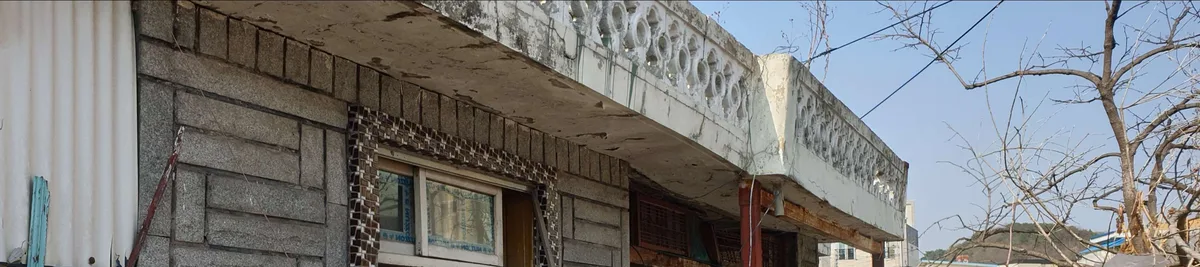
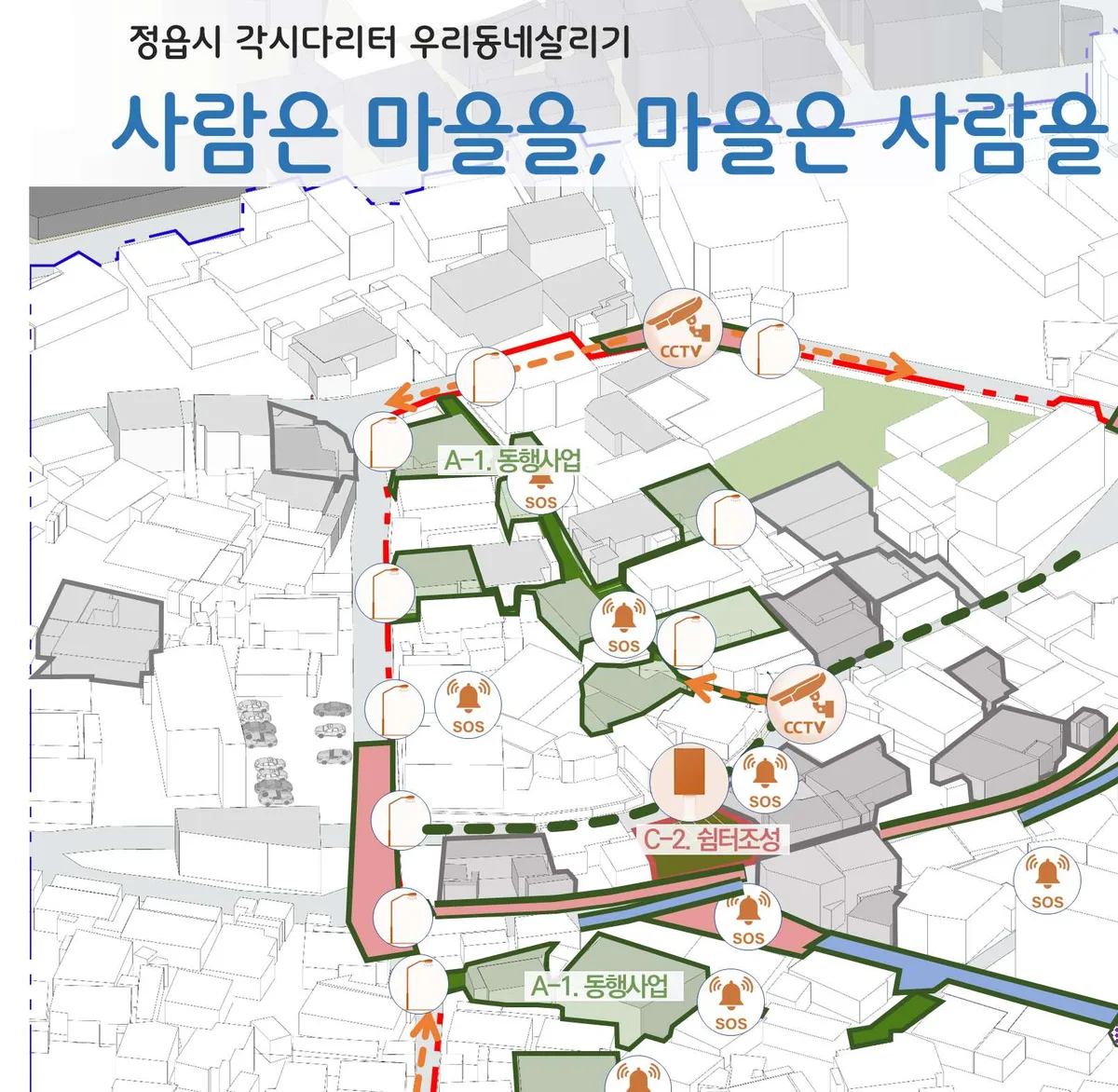
The Gaksidari area in Jangmyeong-dong, Jeongeup City, has historically been the center of the local economy and a key hub for residents' daily lives. However, the commercial district has rapidly declined due to new city development, weakening competitiveness of the declining original downtown, and aging resident demographics. The number of deteriorated buildings and population loss continue to accelerate. We present this area not simply as a target for physical renovation, but as a model of inclusive urban regeneration centered on community recovery.
Approach
This plan was established from a perspective of recovering residents' hearts and caring for communities. Under the philosophy of Jangmyeong (Long Life), we aim to create sustainable local communities, promoting not only economic revitalization but also strengthened social cohesion and cultural identity. Through resident workshops, site surveys, stakeholder consultations, and other engagement, we've reflected the community's real needs and derived concrete, phased implementation strategies.
🏘️
Preserve
Conserving Local
Assets & Cultural
Identity
🌱
Restore
Recovering Community
Bonds & Local
Vitality
🔄
Revitalize
Creating New
Economic
Opportunities
🎯
Sustain
Establishing Long-term
Development
Systems
These four strategies are rooted in the commitment to drive community change 'based on local assets,' 'led by residents,' and 'in sustainable ways.' Combining government's catalytic investment with private sector's voluntary participation, we realize "Jangmyeong (Long Life): Embrace People, Save Communities" vision.
Key Implementation Projects
The implementation plan includes concrete projects under four core strategies. These encompass preservation and activation of historical and cultural resources for restoring local identity, creating resident-participatory community facilities, revitalizing the local economy through support for small business owners, and improving residential environments to promote youth entrepreneurship and returning migration. We also provide diverse financial support options including urban regeneration funds, regional vitalization investment funds, and central government competitive projects to ensure implementation capacity.
Expected Effects
35%
Commercial Vitalization
Through phased implementation of the plan, we expect quantitative outcomes including 35% increase in commercial sales, 20 new businesses created, 40% improvement in resident satisfaction, and 55% increase in dwell time. Qualitative benefits include rediscovery of cultural assets through restored local identity, strengthened community bonds, and establishment of sustainable long-term regional development systems.
Project Significance
This plan distinguishes itself by reconceptualizing urban regeneration not as mere building renovation, but as centered on improving residents' quality of life and restoring community. Through three pillars—local historical and cultural assets, resident-participatory governance, and inclusive economic vitalization—we embody the spirit of "Jangmyeong (Long Life)" and present a model for sustainable regional development in the long term.
#UrbanRegeneration
#Jeongeup
#Gaksidari
#Community
#LongLife
#ResidentParticipation
#LocalVitalization
#CulturalAssets
#Inclusivity